Portal for tuvinology

Tuva.Asia / The New Research of Tuva

Russian version/Русская версия
Сегодня 19 June 2026 г.
Home |
29 November 2010

Tuvan Center for Mongolian Studies Was Opened in Kyzyl

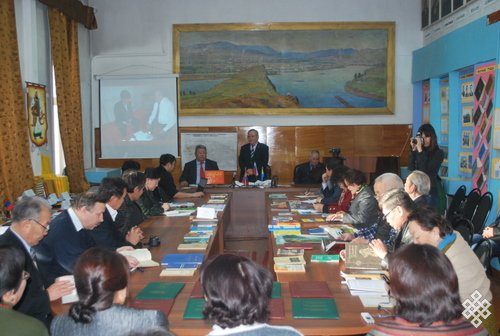
Tuvan Center for Mongolian Studies Was Opened in Kyzyl On November 26, 2010 Tuvan Center for Mongolian Studies at the Tuvan Institute for Research in the Humanities under the Government of the Republic of Tyva was opened. Among the guests of honor at the event there was the Consul General of Mongolia in Kyzyl in the Russian Federation Mr. Dashbalbar Bazarsad. Director of the TIRH Bicheldey Kaadyr-ool introduced aims and goals of the center and its short-range plans. Research and scientific events will be conducted within the framework of the formerly signed agreements with the Mongolian Academy of Sciences and other scientific institutions of Mongolia. The Tuvan Institute for Research in the Humanities, Tuvan State University, and Aldyn Maadyr National Museum of the Republic of Tyva create the scientific basis of the center. It was also announced at the presentation that they are planning to hold the III International Conference “Tengriism and Epic Heritage of the Nations of Eurasia” in Kyzyl from July 1 till 3 July, 2011.

Marianna Kharunova
  • 0 comments
  • 80
 
27 November 2010

The XXII Issue of “The Scientific Notes of Tuvan Institute for Research in the Humanities” Has Come Off the Press

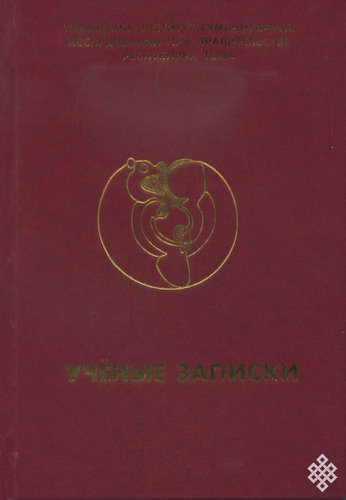
The XXII Issue of “The Scientific Notes of Tuvan Institute for Research in the Humanities” Has Come Off the Press“The Scientific Notes. The XXII Issue” of Tuvan Institute for Research in the Humanities under the Government of the Republic of Tuva was added into the list of new publications on Tuvan studies. The first article is by the director of the institute Bicheldey Kaadyr-ool. It covers the prospects of research in the field of the humanities in Tuva. In the first section of the issue there are proceedings of the republican conference that was dedicated to the 65th anniversary of Tuva’s affiliation to the USSR. The second section of “The Scientific Notes” considers new studies in the context of archeology and history. Some aspects of ethnological and culturological research of contemporary Tuvan studies are presented.

Marianna Kharunova
  • 0 comments
  • 0
 
23 November 2010

Huun Huur Tu: Ancestors Call

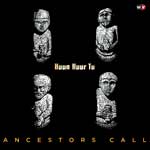
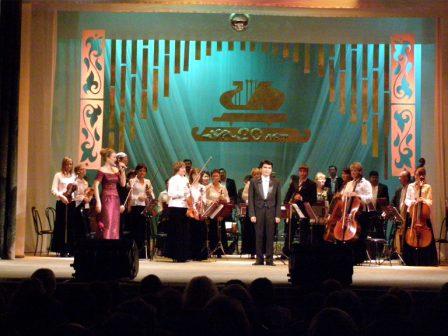
Huun Huur Tu: Ancestors Call"MY HERD roaming on the hill – is it there? Are you words joking or serious, my love? I don't understand." This group may now be global superstars, but the way they open their new CD couldn't be more sweetly authentic. The soloist delivers a simple melody while the rest of the group provide a soft drone – it's a couple of minutes before we get a hint of the throat-singing which is their trademark sound. The second track plunges us into their infectiously warm instrumentalism – low plucked sounds plus a drum – while the throat-singing drops an octave. Some of the songs – for example The Orphan's Lament – have a gorgeous backing of smoothly-bowed strings. The rhythms are all horseback stuff – trotting, cantering, galloping – as befits the land which inspires this music, once the Soviet republic of Tuva, now the Tuva Republic within the Russian Federation and still the home of nomads for whom mountains, rivers, and trees all have their own spirits, and who all mystically "sing".

Michael Church, http://news.scotsman.com
  • 0 comments
  • 0
 
15 November 2010

Kongar-ool Ondar. He took the hit-parades by the throat

Kongar-ool Ondar. He took the hit-parades by the throatIn Krasnoyarsk, the master of throat-singing performs in small halls. But in the USA, his album “Back Tuva Future” got to be among the 10 best, according to “New York Post”, together with John Lennon’s disc.

-  I have traveled throughout the world with concerts, and I have not been only to Australia and Africa.  I can tell you that definitely it is much more complicated to organize a concert in Russia than abroad. The tastes of our young people have been conquered by pop. Of course, that is not our weight category - we work only for real aficionados of national culture, and there are very few of those in Russia. The new generation is losing interest in its own culture - that is a dangerous tendency. But the authorities so far do not want to understand it.

Aif na Enisee. Translated by Heda Jindrak
  • 0 comments
  • 0
 
14 November 2010

Days of Khakass Culture just transpired in Tuva

Days of Khakass Culture just transpired in TuvaPractically the entire collective of Khakass Philharmony participated in the program of Days of Khakass Culture in Tuva, where it was associated with the Day of National Unity. Now even many Tuvan children know what a chatkhan is. It is a Khakass musical instrument in the shape of an elongated rectangular box with horse-hair strings stretched length-wise; it is a symbol of the Khakass nation. It was precisely a chatkhan which was used to accompany the heroic epics, “alyptyg nymakhi”. It is believed that chatkhan is an instrument equal in power to the shaman’s drum, and if necessary can be successfully used for the same purpose. Another favorite Khakass instrument, which has not lost its authority to this day, is khomus - a remote relative of Russian balalaika. Just like the chatkhan, it has been known since ancient times: the first mentions of  khomus date to the beginning of our era.

Alexander Filatenko, “Tuvinskaya Pravda”. Translated by Heda Jindrak
  • 0 comments
  • 0
 
14 November 2010

“The Secret History of the Mongols” is 770 years old

“The Secret History of the Mongols” is 770 years oldThis year, the historical work “The Secret History of the Mongols” which was written in 1240, turned 770 years. In the framework of the celebrations of this anniversary, on November 8-9 a scholarly conference took place in the capital, organized by AN of Mongolia, together with MonGU, Scientific-technical University and Museum of national history. About 30 Mongolian scholars and 8 foreign mongolists presented scholarly research papers on the subject of this unique document. During the conference at the Museum of National History an exhibition of  works of Mongolian craftsmen and artists, as well as emigrants from the Autonomous district of Inner Mongolia, China, was opened. The emigrants presented their own version of “The Secret History of the Mongols”, transcribed on silk paper in artistic calligraphy. There are statistical data that this work has been translated into 20 languages of 30 countries of the world, and was published 200 times. The most popular variant among Mongolian readers is the translation of academician Ts. Damdinsuren. This version was published in an issue of 180 thousand.

IA Montsame. Translated by Heda Jindrak
  • 0 comments
  • 0
 
10 November 2010

Ecology of Love. (Part II)

Ecology of Love. (Part II) -  What does the Direction of specially protected natural territories of Republic Tyva, that you are the head of, do, Chaizu Suvan-oolovna?

We protect the natural complexes of the prohibited territories, and monitor the condition of their resources. We do that by patrolling those territories, performing raids, and make sure that the laws are observed. Each of the protected territories has its own regime of protection. Here in Tuva we have fifteen protected territories and one natural park. We have 19 inspectors protecting them in the field. The territories have different areas, but the way it works out is that  whether it is 100 thousand hectares or 30 thousand, one person has to do the work. If you put together the total area of all the protected territories  -  700 thousand hectares  -  and average it out, each inspector is responsible for more than 35 thousand hectares on the average. That is very much.

Sayana Ondur, Center of Asia. Translated by Heda Jindrak
  • 0 comments
  • 100
 
9 November 2010

A Frenchwoman on the roads of Tibet

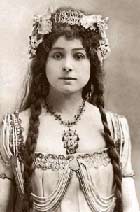
A Frenchwoman on the roads of Tibet Alexandra David-Neel is known as the author of several popular books about esoteric subjects, the best known of which is “Magic and Mystery in Tibet”(1931). However, there is not much that is generally known about the personality of this admirable woman. She was born in 1868 in Paris. The little girl started showing musical abilities very early in life. As she grew up, she became quickly famous as a singer, and shone on the stage of Paris Opera. Then she made a fortunate marriage. But when she turned 43, David-Neel’s life drastically changed - she was diagnosed with throat cancer. The physicians gave her a terminal prognosis.

www.myjane.ru. Translated by Heda Jindrak
  • 0 comments
  • 0
 
9 November 2010

Detailed biography of Kaigal-ool Khovalyg, one of the best throat singers of the world, has been published in Tuva

Detailed biography of Kaigal-ool Khovalyg, one of the best throat singers of the world, has been published in Tuva Ulyana Mongush, a scholar, has completed a titanic work, having collected under one cover all the interesting facts about the life of the legendary Tuvan khoomeizhi, leader oft eh group Huun-Huur-Tu, Kaigal-ool Khovalyg, who celebrated his 50th birthday earlier this year. The book “The Willful Khovalyg and Huun-Huur-Tu was published I two languages - Russian and Tuvan. There is also a short summary of the book in English.  “Khurtuun Khovalyg bile Khun-Khurtu” quotes the rich speech of the throat singer, who has a remarkable sense of humor and knows all the intricacies of Tuvan folk traditions.

Dina Oyun. Translated by Heda Jindrak
  • 0 comments
  • 0
 
5 November 2010

Ecology of Love

Ecology of Love She is able to do many things that are beyond the imagination of  an ordinary woman:  she climbs mountains, understands the peculiarities of a steppe ecosystem, easily reads the taiga like a book, hunts armed poachers, and plays billiards. 27 people work under her leadership. Twenty-three of them are men who are sparse of word and quick to act, who do not sit in offices, but perform their work of  guarding the protected territories in their care. Animals are not afraid to meet them, but hardened poachers and criminals are; to win their sincere respect is a very rare thing. Outwardly fragile but hard inside, she believes that everybody needs the protection of the Direction of specially protected natural territories of  Republic Tyva that she leads: forest and water, hare and bear,  little fish and small birds, but most of all - people themselves. Her family speaks in four languages, but the are rarely all in one place. Her husband is the American scientist Brian Donahoe, who is also an ecologist.
Sayana Ondur, Center of Asia. Translated by Heda Jindrak
  • 0 comments
  • 0
 
© 2009—2026, Tuva.Asia - portal for tuvinology, «The New Research of Tuva» - electronic magazine . All Rights Reserved.
Established in 2009
Registered as a mass media by the Federal Supervision Agency for Information Technologies and Communications of Russian Federation, certificate Эл №ФС77-37967 issued on November, 5 2009.

If quoted, hyperlink to Tuva.Asia obligatory.

Рейтинг@Mail.ru

География посетителей сайта