Portal for tuvinology

Tuva.Asia / The New Research of Tuva

Russian version/Русская версия
Сегодня 19 June 2026 г.
Home |
12 October 2010

Flower bouquet of historical testimony about Tuva

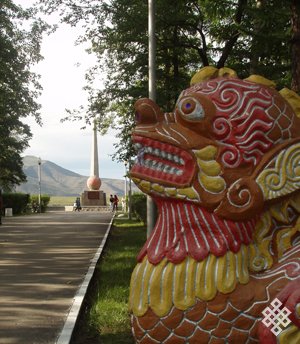
Flower bouquet of historical testimony about Tuva Flower bouquet of historical testimony about Tuva In Kyzyl, the capital of Tuva, on the picturesque shore near the confluence of the Bii-Khem and Kaa-Khem rivers, which give the origin to the Great River Ulug-Khem, there stands a majestic obelisk: Center of Asia”. There is deep significance in the name of the obelisk: Tuva is at the maximum distance from the world’s oceans; it means that it is at the geographic center of the Asian continent. Since times immemorial, this area has been the crossroads and meeting place of cultural traditions of the East and West, of the North and South; this is where mutual influence and mutual enrichment of different cultures took place.

Marianna Devlet, “Slovo plyus”. Translated by Heda Jindrak
  • 0 comments
  • 0
 
12 October 2010

About the new translation of Otto Maenchen-Helfen’s “Journey to Tuva”

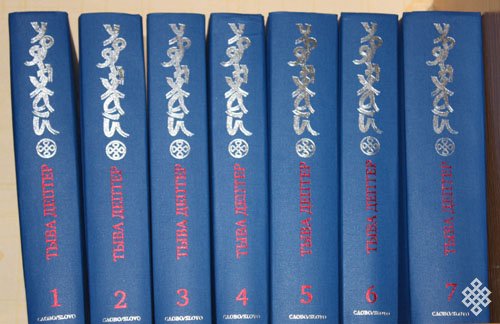
About the new translation of Otto Maenchen-Helfen’s “Journey to Tuva” In connection with the recent presentation of the seven-volume anthology  “Uriangkhai. Tyva Depter.”,  edited by Sergei Shoigu, I would like to demonstrate the value of this entire project by a single example of a rare publication included in this anthology – namely a translation of Otto Maenchen-Helfen’s book “Journey to Tuva”. The anthology presents, together with other interesting scholarly works, the first published translation into Russian language of the book of an Austrian German, Otto Maenchen-Helfen, who was a social democrat in his political convictions. It can be stated without any exaggeration that the author of this relevant translation, aide to the Chairman of the Government of Republic Tuva, Dina Oyun, produced a magnificent contribution to the study of a multitude of problems in the more recent history of Tuva. She translated the” Foreword” to the 1992 USA edition, written by the Austrian scholar’s wife, Anna Maenchen, from English, and the entire book “Journey to Tuva” from the German original, which was first published in Berlin almost 80 years ago.

Nikolai Mollerov, "Slovo plyus". Translated by Heda Jindrak
  • 0 comments
  • 100
 
12 October 2010

98 years from the birth of Lev Gumilev

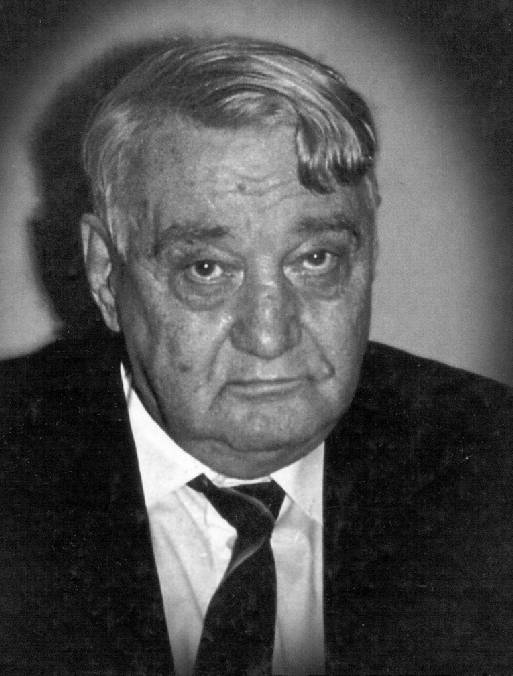
98 years from the birth of Lev Gumilev We are observing 98 years from the birth of prominent Russian historian – ethnologist, poet, translator, founder of the passionary theory of ethnogenesis, researcher of nomadic cultures of Eurasia, Lev Gumilev. He was born in Tsarskoye Selo on October 1, 1912. He was son of poets Nikolai Gumilev and Anna Akhmatova. As a child he was brought up by his grandmother in Slepnevo of Bezhetsk district of Tver gubernia. From 1917 to 1929 he lived in Bezhetsk, and from 1930 in Leningrad. During the years 1930-1934 he worked in expeditions in the Sayans, the Pamir and in Crimea. From 1934 he matriculated at the department of history of Leningrad University. In 1935 he was expelled from the university and arrested, but after some time he was released. In 1937 he was reinstated at the university.

  • 0 comments
  • 100
 
© 2009—2026, Tuva.Asia - portal for tuvinology, «The New Research of Tuva» - electronic magazine . All Rights Reserved.
Established in 2009
Registered as a mass media by the Federal Supervision Agency for Information Technologies and Communications of Russian Federation, certificate Эл №ФС77-37967 issued on November, 5 2009.

If quoted, hyperlink to Tuva.Asia obligatory.

Рейтинг@Mail.ru

География посетителей сайта