Portal for tuvinology

Tuva.Asia / The New Research of Tuva

Russian version/Русская версия
Сегодня 13 June 2026 г.
Home |
25 June 2011

The sounds of chatkhan

The sounds of chatkhan Long time ago, according to the legend, Khakass people did not know of throat-singing. When the Master of khai (throat-singing) - khai eezi found out, he came to teach the people. Huge, black, handsome, he met a Khakass at Iskharchyzy (near Kizlas), who was sleeping on the bank of Great Esi river.  When the sleeper woke up, he was so frightened at the sight of khai eezi, that he involuntarily exclaimed: "Tatai!" - a magical word, expressing revulsion. The Master of Khai was offended, did not say anything, went to the north and settled between the White and Black Iyus rivers. There he changed his anger into mercy and began to teach his art to the people. This became the homeland of all the famous Khakass khaiji, tellers of  heroic epics, stories and legends of the ancient hero warriors… 

Alexei Annenko. Gazeta Khakassia. Translated by Heda Jindrak
  • 0 comments
  • 100
 
22 June 2011

One thousand Buddhist books are coming to Tuva from Moscow

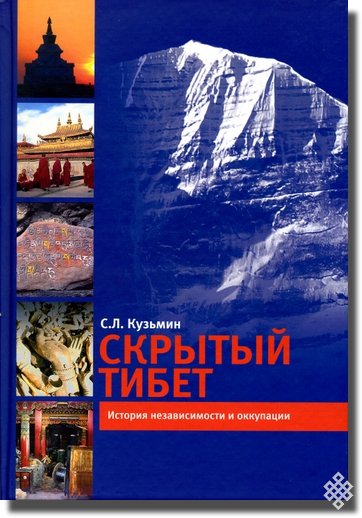
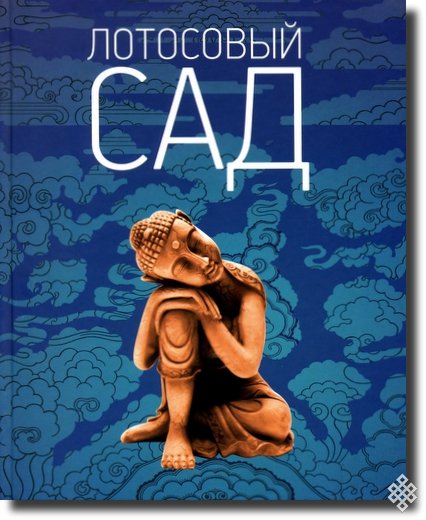
One thousand Buddhist books are coming to Tuva from MoscowOne thousand Buddhist books are coming to Tuva from MoscowPlenipotentiary office of  Republic Tyva in Moscow has sent books to Tuva, donated to Tuvan libraries and schools by the Save Tibet Foundation - almost a thousand of them. Among them are:  a collection of classical Buddhist texts "The Lotus Garden" ( editor PhD. M. Kozhevnikova,2010), for children of middle school age; S. Kuzmin's book "Hidden Tibet. History of independence and occupation" 2010), and booklets with Buddhist texts preparatory to the Russian teachings of His Holiness Dalai Lama XIV in December 2011.

This is not the first present that the Foundation has given Tuva: last year  they have presented to young readers of the republic a "bioGraphical" novel by Japanese artist Tetsu Saiwai, devoted to the life and activities of His Holiness Dalai Lama XIV in the "manga" format.

Chimiza Lamajaa. Translated by Heda Jindrak
  • 0 comments
  • 0
 
20 June 2011

Not like everybody else. Part III

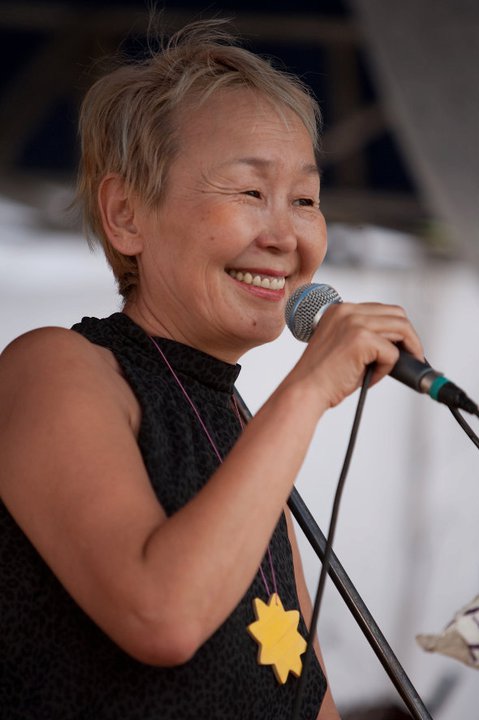
Not like everybody else. Part III-  Sainkho, if somebody addresses you as Lyudmila, will you respond?

-  Certainly not. I don't react to that name anymore. And the audience won't react either. If somebody hangs up a poster: Lyudmila Namtchylak, nobody will understand anything. 

-  Why did you pick precisely this name as your stage pseudonym?

-   A woman of that name used to live in Kyzyl - Sainkho Darzhayevna Dorzhu. She was a dancer, and later, after she retired, she worked in the Union of Theatre artists.  Charming, kind, woman. I liked both her and the combination of the sounds of her rare name.

And when it became necessary to have a mysterious, exotic-sounding name which would reflect what I was doing on the stage, that is what I chose.  The process of getting used to my new name began in 1986: in Krasnodar,  they  gave me the certificate already  as Sainkho. 

Nadezhda Antufieva Center of Asia. Translated by Heda Jindrak
  • 0 comments
  • 100
 
16 June 2011

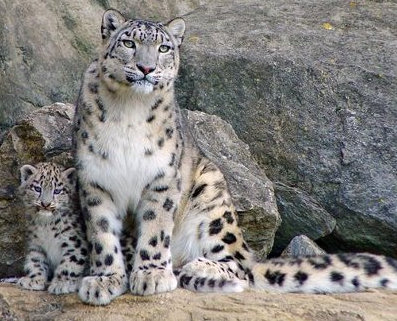
How does the snow leopard live in South Siberian mountains?

How does the snow leopard live in South Siberian mountains?The next stage of complex field research of the Program of study and monitoring of irbis (snow leopard) of South Siberia (Program "Irbis") has been finished.  As DV-ROSS was informed by Natalia Remennikova, employee of A. N. Severtsov Institute of problems of ecology and evolution of RAN, this work took place from 25 April to 24 May 2011  on the territory of State natural biospheric preserve "Sayano-Shushenskiy".

Together with workers of the preserve, the previously installed photo-traps were  checked. From  25 April  to 16 May, they documented a snow leopard named "Mongol" by the scientists, who received a satellite collar in March. The irbis was actively marking his territory and exhibited typical behavior of an adult snow leopard male., which is  easily seen on the photographs.

DV-ROSS. Translated by Heda Jindrak
  • 0 comments
  • 100
 
13 June 2011

Not like everybody else. Part II

Not like everybody else.  Part II-  Sainkho, what is your main character trait?

-  Curiosity.

-  And being non-standard?

-  Being non-standard is more of a result.

In the West, probably, it is less conspicuous, because people are more tolerant.  To behave extravagantly or to look different from the others is not such a very noticeable thing. Artists and singers are perceived as people of a different world, and society accepts their out of the ordinary characteristics calmly.

-  Did it take a great inner effort to shave your head?

-  No. I was 43 at the time. My management was in Milan, and Milan is the Italian Mecca of fashion.  And they would design new clothing for me for every new album. And for one of the albums, they found a long cashmere dress, form-fitting, with bare shoulders. And something like a shawl that I could wrap myself in.

Nadezhda Antufieva, Center of Asia. Translated by Heda Jindrak
  • 0 comments
  • 0
 
9 June 2011

Not like everybody else. Part 1

Not like everybody else.  Part 1She had two names. Only one remained - a mysterious one.

She herself is a mystery.

Avant-garde.  Intriguing. Non-standard. Not subject to aging.

Improviser and experimenter, constantly surprising others and able to surprise herself.

Sainkho Namtchylak, who sings in voices of winds and hurricanes, stars and birds. She makes drawings with tea and coffee. She writes poems without punctuation and without rhyme - by a stream of consciousness.

Having conquered world fame, she for a long time remained misunderstood and unrecognized in her own native country - in Tuva. And it made her suffer. Even mysteries can suffer.

Nadezhda Antufieva, Center of Asia. Translated by Heda Jindrak
  • 0 comments
  • 60
 
7 June 2011

Tuva-Seminar at the University of Bonn, Germany, in honour of Sevyan I. Vainshtein

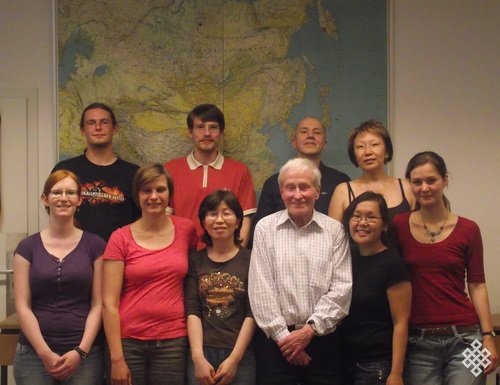
Tuva-Seminar at the University of Bonn, Germany, in honour of Sevyan I. Vainshtein Although planned for April 12, it was on a sunny and warm evening of May 10 in Bonn, the former capital city of West Germany on the river Rhine, that the renowned University of  Bonn through its Institute for Oriental and Asian Sciences, Department for Mongolistic and Tibetan Studies, had invited both its staff and students for an evening entirely dedicated to Tuva and its culture.

Alouette Verlag’s editor and publisher of the German edition of Sevyan Vainshtein’s famous book “Mysterious Tuva – Expeditions into the Heart of Asia” (with a DVD featuring the German version of Leonid Kruglov’s documentary “Sewn Arrows”) had been asked to introduce the author and his book to the assembled academic staff (see photo) and students.

Jürgen Boden
  • 0 comments
  • 80
 
2 June 2011

Tuvan theatre reminded Turks about brotherhood

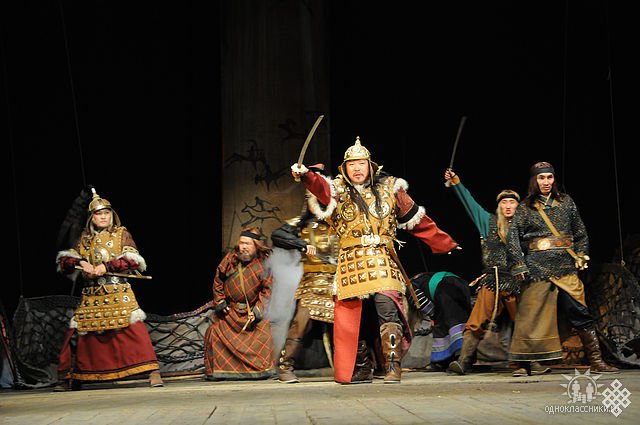
Tuvan theatre reminded Turks about brotherhoodOn 1 June, during the 10th International theatre festival of Turkic nations "Nauruz", actors of  V. Kok-ool Theater of music and drama presented their show "Kultegin", based on E. Mizhit's play, on the stage of K. Tinchurin Tatar theatre of comedy and drama. The hall was packed. The show went on in one breath, in the opinion  of both the actors and the audience, with exciting emotional acting of the performers, who put all 100% into it. The festival's experts, in judging the play, especially noted the expressive acting of Oleg Sat and Stanislav Iril, and the feminine acting of actress Aizana Chylbak-ool. The director-producer of the play Alexei Oorzhak played  the role of Alp Eletmish.  The specialists called the show "virile" and Tuvan theatre in general special. The main theme of "Kultegin", as the theme of brotherhood of Turkic nations, turned out to be very much in harmony with the idea of festival "Nauruz".

Saidana Khertek. Translated by Heda Jindrak
  • 0 comments
  • 0
 
1 June 2011

Tuvan "ShaaLaash" sounded at the opening of "Nauruz" in Kazan

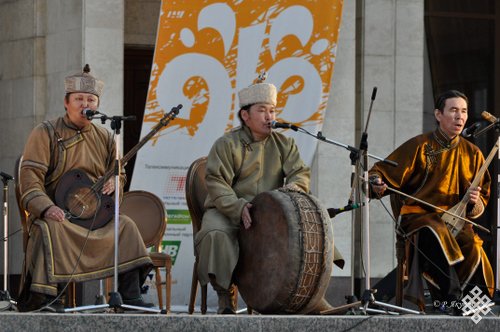
Tuvan "ShaaLaash" sounded at the opening of "Nauruz" in KazanOn 30 May in Kazan on the square in front of the State Academic Theatre of G. Kamal, official opening of the 10th International Theatre Festival of Turkic People "Nauruz" took place. From Tuva, folk music ensemble "ShaaLaash" (Sound of Waterfall or of Great River Yenisei) of the Tuvan music and drama theatre performed.  Members of the ensemble: National artist of RT Stanislav Iril )doshpuluur, vocal, khoomei), Merited artist of RT Saidash Mongush (kengirge, vocal, khoomei), director of musical part of the theatre Oktyabr Saaya (igil, vocal, khoomei), and National artist of RT, director of the theatre Nachyn Shalyk (percussions, sygyt).

In the words of Stanislav Iril, the spectators insisted on an encore. "ShaaLaash" will be performing again at the closing of the festival, which will take place on 3 June (on Sabantui holiday).

Saidana Khertek, Chimiza Lamajaa. Translated by Heda Jindrak
  • 0 comments
  • 0
 
© 2009—2026, Tuva.Asia - portal for tuvinology, «The New Research of Tuva» - electronic magazine . All Rights Reserved.
Established in 2009
Registered as a mass media by the Federal Supervision Agency for Information Technologies and Communications of Russian Federation, certificate Эл №ФС77-37967 issued on November, 5 2009.

If quoted, hyperlink to Tuva.Asia obligatory.

Рейтинг@Mail.ru

География посетителей сайта